

 by
by 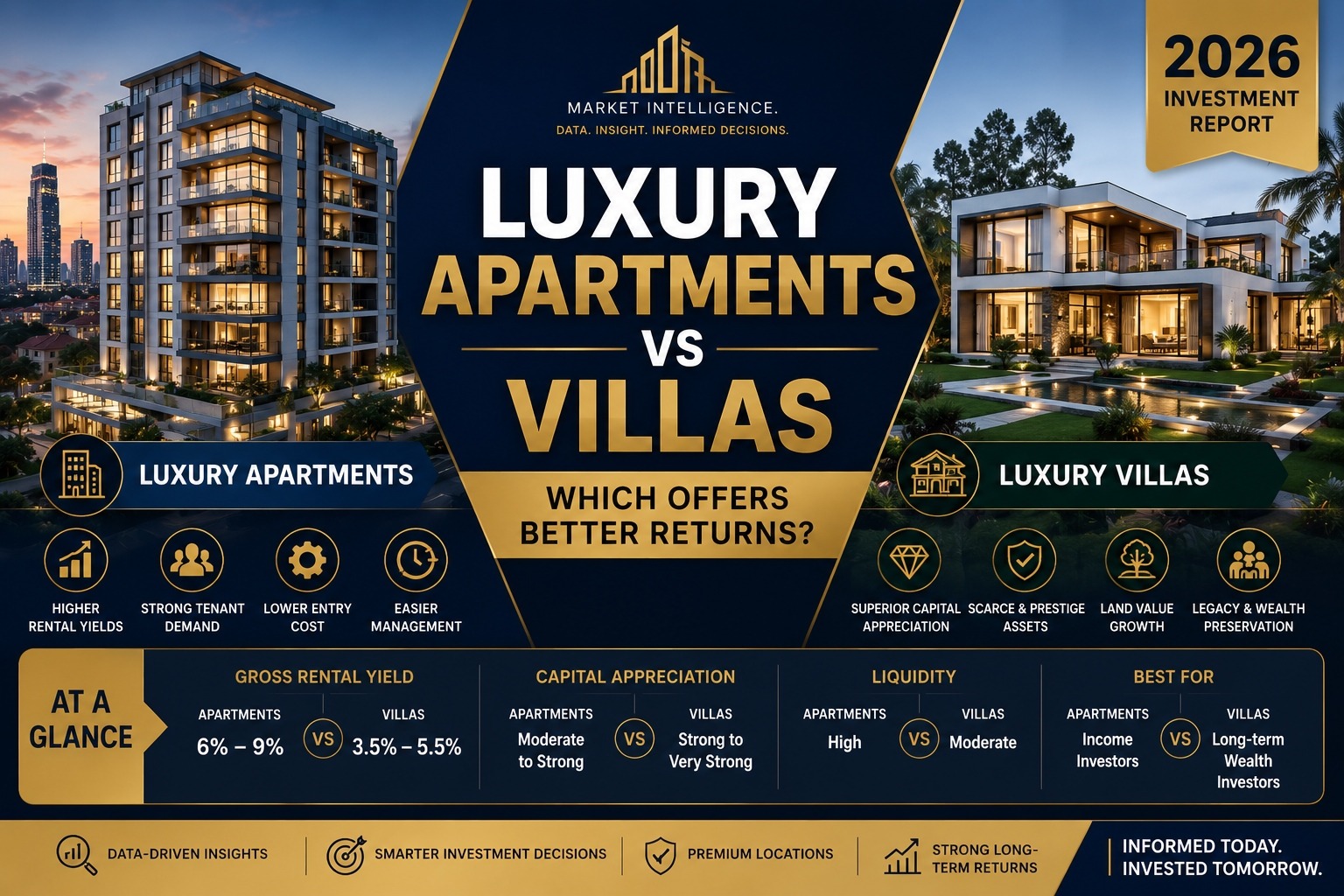
Luxury Apartments vs Villas in Kenya: Which Delivers Better Returns?
For affluent investors entering Kenya’s premium property market, one question consistently stands out: Should you invest in a luxury apartment or a standalone villa? Both asset classes have historically produced strong returns, yet they serve different investment profiles and wealth strategies. Luxury apartments generally offer higher rental yields and simpler management, while villas tend to deliver superior long-term capital appreciation driven by land scarcity. This analysis examines Nairobi’s premium residential market to help you decide which asset class aligns with your financial objectives and expectations for luxury property returns Kenya investors can realistically achieve.
—
Understanding the Two Asset Classes
Luxury Apartments
Luxury apartments are typically located in established urban hubs, including:
– Westlands
– Riverside
– Kilimani
– Lavington
– Kileleshwa
– Upper Hill
Common features include:
– Concierge services
– Swimming pools and fitness centres
– Smart home technology
– Backup power and water systems
– Enhanced security
These properties primarily target corporate tenants, expatriates, young professionals, diaspora investors, and Airbnb or serviced apartment operators.
Luxury Villas
Prime villa locations include:
– Karen
– Runda
– Muthaiga
– Gigiri
– Nyari
– Kitisuru
– Spring Valley
Villas typically feature:
– Large private gardens
– Detached servant quarters
– Private swimming pools
– Home offices
– Extensive parking
– High privacy levels
The primary buyers include high-net-worth individuals, diplomats, business executives, family offices, and long-term wealth investors.
—
Rental Yield Comparison
One of the key metrics investors evaluate is gross rental yield. The typical returns for each asset class in Kenya’s luxury market are:
| Asset Type | Typical Gross Yield |
|————|———————|
| Luxury Apartments | 6% – 9% |
| Luxury Villas | 3.5% – 5.5% |
Why Apartments Often Generate Higher Yields
Luxury apartments require a lower capital outlay while commanding relatively strong monthly rents.
Example:
– Luxury Apartment: Purchase price KES 20 million; monthly rent KES 140,000; annual rent KES 1.68 million; gross yield 8.4%
– Luxury Villa: Purchase price KES 150 million; monthly rent KES 600,000; annual rent KES 7.2 million; gross yield 4.8%
For investors focused primarily on cash flow, apartments generally outperform.
—
Capital Appreciation
While apartments often produce stronger annual income, villas have historically benefited from greater long-term appreciation. The reason is simple: land appreciates, buildings depreciate.
Luxury villas sit on increasingly scarce parcels of land within prestigious neighbourhoods where new supply is highly restricted. Prime suburbs such as Karen, Muthaiga, Runda, and Gigiri continue to experience sustained upward pressure on land values due to:
– Limited availability of developable land
– Strict zoning regulations
– Sustained diplomatic demand
– Ongoing infrastructure improvements
– Population growth
Apartments, by contrast, face competition from ongoing new developments, which can moderate price growth over time.
—
Liquidity and Ease of Sale
Luxury Apartments
Advantages:
– Larger buyer pool
– Lower entry price
– Attractive to first-time investors
– Easier financing options
Typical selling period: 3–8 months
Luxury Villas
Advantages:
– Scarcity value
– Prestige factor
– High long-term demand
Challenges:
– Smaller buyer pool
– Higher transaction values
– Longer marketing periods
Typical selling period: 6–18 months, depending on pricing and location.
—
Maintenance and Ownership Costs
| Expense | Luxury Apartment | Luxury Villa |
|———|—————–|————–|
| Service Charge | High | Low to Moderate |
| Garden Maintenance | Minimal | Significant |
| Security Costs | Shared | Owner-funded |
| Exterior Maintenance | Shared | Owner-funded |
| Property Management | Simple | More intensive |
Luxury apartments benefit from economies of scale, while villas generally require greater ongoing expenditure.
—
Tenant Demand
Apartments
Strong demand comes from expatriates, young executives, corporate leases, and short-term accommodation operators. Occupancy rates tend to remain relatively stable for well-managed developments.
Villas
The tenant market is narrower but highly stable. Typical tenants include diplomatic missions, international NGOs, embassy staff, and senior corporate executives. Long-term leases are common, which reduces vacancy risk.
—
Wealth Preservation
Many family offices and high-net-worth investors view luxury villas as generational assets rather than purely income-producing investments. Their advantages include:
– Land scarcity
– Inflation protection
– Legacy ownership
– Long-term capital preservation
Apartments, meanwhile, often serve as active income-producing investments that generate regular cash flow.
—
Which Investment Suits You?
Choose Luxury Apartments If You Want:
– ✓ Higher rental yields
– ✓ Lower entry capital
– ✓ Easier property management
– ✓ Faster resale potential
– ✓ Exposure to furnished and serviced apartment markets
Choose Luxury Villas If You Want:
– ✓ Long-term wealth preservation
– ✓ Superior capital appreciation
– ✓ Scarce trophy assets
– ✓ Prestige ownership
– ✓ Lower exposure to future supply competition
—
Investor Verdict
| Investment Objective | Better Option |
|———————-|—————-|
| Monthly Cash Flow | Luxury Apartments |
| Rental Yield | Luxury Apartments |
| Capital Appreciation | Luxury Villas |
| Long-Term Wealth Preservation | Luxury Villas |
| Liquidity | Luxury Apartments |
| Legacy Investment | Luxury Villas |
| Ease of Management | Luxury Apartments |
There is no universal winner between luxury apartments and villas—only the asset that best matches your investment objectives.
For income-focused investors, premium apartments in Westlands, Riverside, and Kilimani continue to provide attractive yields and straightforward management. For those prioritising long-term wealth creation and capital preservation, luxury villas in Karen, Muthaiga, Runda, and Gigiri remain among Kenya’s most desirable real estate assets.
Increasingly, sophisticated investors are building balanced portfolios that combine the steady cash flow of luxury apartments with the enduring appreciation potential of prime residential land and villas.
—
Disclaimer: This report is intended for informational purposes only and should not be construed as investment or financial advice. Actual investment performance depends on market conditions, asset quality, management standards, and individual property characteristics.




Join The Discussion