

 by
by 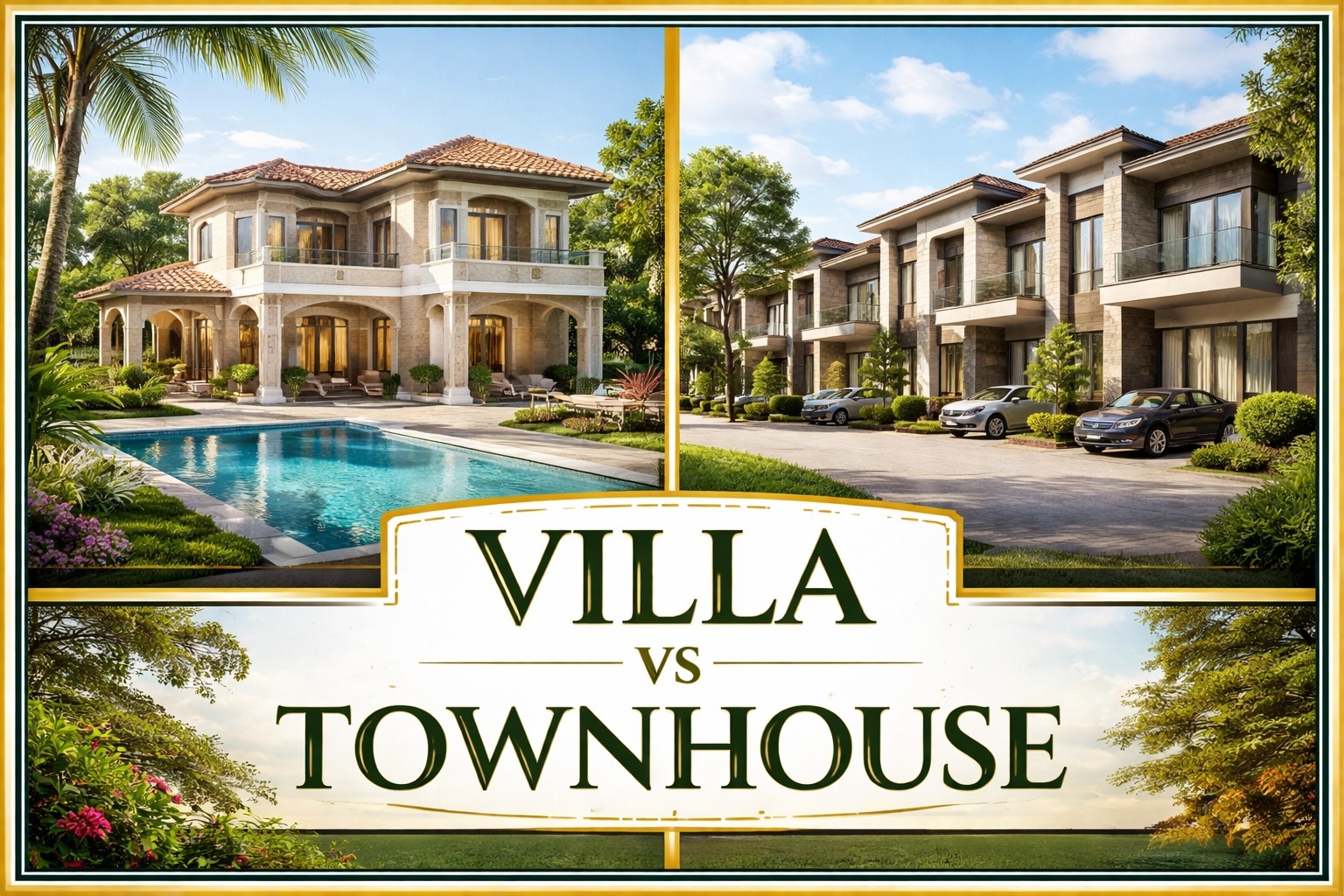
Villa vs Townhouse in Kenya: Historical Evolution, Typological Differences, and Contemporary Market Implications
Kenya’s residential real estate market has undergone significant transformation over the last century, shaped by colonial planning frameworks, post-independence urbanisation, land tenure systems, and evolving socio-economic dynamics. Among the most prominent high-end residential typologies to emerge within this evolution are villas and townhouses. Although often grouped within the broader category of “luxury housing,” villas and townhouses represent distinct historical trajectories, planning philosophies, and market functions. This paper examines the historical development, defining characteristics, and comparative performance of villas and townhouses in Kenya, with particular emphasis on land use, urban form, investment dynamics, and lifestyle suitability.
1. Introduction
Residential property typologies are not merely architectural choices; they are reflections of economic structures, land policies, cultural values, and urban planning ideologies. In Kenya, the differentiation between villas and townhouses has become increasingly relevant as land scarcity, rising urban populations, and changing buyer preferences reshape the housing market.
While villas have traditionally symbolised prestige, land ownership, and exclusivity, townhouses have emerged as a response to urban densification, affordability constraints, and demand for secure gated living. Understanding the distinction between these two housing forms requires a historical lens that traces their evolution from colonial-era planning to modern real estate development.
This paper seeks to provide that context while guiding buyers, investors, developers, and valuers in making informed decisions.
2. Historical Background of Residential Development in Kenya
2.1 Pre-Colonial and Early Settlement Patterns
Before colonial intervention, indigenous Kenyan settlements were largely communal, low-density, and land-abundant, with housing forms adapted to climate, culture, and subsistence livelihoods. Land was not commoditised in the modern sense, and permanent residential typologies such as villas or townhouses did not exist.
2.2 Colonial Planning and the Birth of Low-Density Housing (1895–1963)
The introduction of formal residential planning in Kenya occurred during the British colonial period. Urban centres such as Nairobi, Mombasa, Nakuru, and Eldoret were structured along racial and economic segregation lines, with Europeans allocated expansive, low-density residential zones.
These areas — now known as Karen, Muthaiga, Runda, and Loresho — formed the historical foundation of what is today recognised as villa-style development. Key characteristics included:
-
Large land parcels (often ½ acre and above)
-
Detached houses with extensive gardens
-
Strict zoning regulations limiting density
-
Emphasis on privacy and exclusivity
Townhouses, by contrast, were largely absent during this period, as land availability and planning philosophy favoured sprawl rather than density.
3. Post-Independence Urban Growth and Housing Demand (1963–1990s)
3.1 Urbanisation and Middle-Class Expansion
Following independence in 1963, Kenya experienced rapid urbanisation driven by rural-to-urban migration, public sector growth, and industrialisation. The newly emerging African middle class aspired to home ownership, particularly in Nairobi and other urban centres.
However, land within established low-density zones remained scarce and expensive. This period marked the beginning of pressure on traditional villa zones, although zoning laws largely preserved their character.
3.2 Early Forms of Cluster Housing
The late 1980s and 1990s saw the introduction of cluster housing concepts, particularly in areas such as Lavington and Westlands. These developments represented early prototypes of what would later evolve into modern townhouses:
-
Shared access roads
-
Smaller plot subdivisions
-
Gated compounds for security
This shift laid the groundwork for townhouses as a formal residential typology in Kenya.
4. Emergence of Townhouses in Kenya (1990s–2000s)
4.1 Land Scarcity and Planning Efficiency
By the 1990s, escalating land values and shrinking parcel sizes made traditional villas increasingly unattainable for many buyers. Developers responded by introducing townhouses as a compromise between detached housing and apartment living.
Townhouses offered:
-
More efficient land use
-
Lower per-unit land cost
-
Enhanced security through gated estates
-
Managed communal amenities
4.2 Policy and Infrastructure Influence
Infrastructure improvements, particularly road expansions and commuter rail access, facilitated townhouse developments in Syokimau, Kitengela, Ruiru, and Thika Road corridors. County governments increasingly approved higher-density residential schemes, further accelerating townhouse proliferation.
5. Defining Villas in the Contemporary Kenyan Context
5.1 Conceptual Definition
In modern Kenya, a villa is understood as a detached or semi-detached luxury residence, often within a gated estate or on an individual freehold or leasehold plot. Villas represent the uppermost tier of residential development, both in cost and spatial allocation.
5.2 Physical and Functional Characteristics
Key characteristics include:
-
Large plot sizes (typically ⅛ acre and above)
-
Minimal or no shared walls
-
Private landscaped gardens
-
Ancillary structures such as DSQs
-
Optional private swimming pools
-
Customised architectural design
-
Low housing density
5.3 Geographic Concentration
Villas are predominantly located in:
-
Karen, Runda, Muthaiga, Loresho
-
Nyali, Vipingo, Diani, Watamu
-
Exclusive gated developments on urban fringes
5.4 Market Positioning
Villas cater to:
-
High-net-worth individuals
-
Diplomats and expatriates
-
Luxury rental and holiday-home investors
-
Buyers prioritising long-term capital preservation
6. Defining Townhouses in the Contemporary Kenyan Context
6.1 Conceptual Definition
A townhouse is a multi-level residential unit constructed as part of a row or cluster, sharing side walls with adjacent units. Townhouses are typically located within planned gated communities.
6.2 Physical and Functional Characteristics
Key characteristics include:
-
Shared walls (one or two sides)
-
Smaller private outdoor spaces
-
Uniform architectural design
-
Shared infrastructure and amenities
-
Centralised security and estate management
-
Higher density than villas
6.3 Geographic Concentration
Townhouses are common in:
-
Kilimani, Kileleshwa, Westlands
-
Lavington and Riverside fringes
-
Syokimau, Kitengela, Ruiru
-
Emerging satellite towns
6.4 Market Positioning
Townhouses appeal to:
-
Middle and upper-middle income buyers
-
Urban professionals and young families
-
Investors targeting rental income
-
Buyers seeking gated-community convenience
7. Comparative Analysis: Villa vs Townhouse in Kenya
| Feature | Villa | Townhouse |
|---|---|---|
| Building Form | Detached / Semi-detached | Attached units |
| Privacy | Very high | Moderate |
| Density | Low | Medium to high |
| Plot Size | Large | Small to medium |
| Outdoor Space | Private gardens & pools | Limited private gardens |
| Cost | High | Relatively affordable |
| Maintenance | Individually managed | Estate-managed |
| Security | Private or estate-based | Centralised gated security |
| Rental Market | Niche luxury | Broad urban demand |
8. Cost Considerations and Affordability Dynamics
Villas command higher prices due to:
-
Larger land components
-
Lower density approvals
-
Customised finishes
-
Prestige location premiums
Townhouses, by contrast:
-
Reduce per-unit land cost
-
Offer predictable construction efficiencies
-
Benefit from economies of scale
-
Typically involve mandatory service charges
9. Investment and Valuation Perspective
9.1 Villas
From a valuation standpoint, villa values are driven by:
-
Location and neighbourhood prestige
-
Plot size and zoning restrictions
-
Architectural quality
-
Privacy and exclusivity
Villas often deliver strong capital appreciation but may exhibit slower resale velocity due to higher entry prices.
9.2 Townhouses
Townhouse values are influenced by:
-
Estate quality and management
-
Security standards
-
Occupancy rates
-
Proximity to employment nodes
They generally offer higher rental yields and faster market liquidity.
10. Buyer Decision Framework
10.1 When a Villa Is Preferable
-
Long-term family residence
-
Wealth preservation strategy
-
Prestige and privacy prioritisation
-
Low-density living preference
10.2 When a Townhouse Is Preferable
-
Urban convenience
-
Budget efficiency
-
Rental income focus
-
Managed living environment
Villas and townhouses represent two distinct yet complementary responses to Kenya’s evolving residential landscape. Villas reflect historical land abundance, prestige, and exclusivity, while townhouses embody modern planning efficiency, affordability, and urban practicality. Neither typology is inherently superior; their suitability depends on economic capacity, lifestyle priorities, and investment objectives.
As Kenya continues to urbanise and land becomes increasingly constrained, the role of townhouses will expand, while villas will retain their status as premium, low-density assets. Professional valuation and feasibility analysis remain critical in ensuring informed acquisition and sustainable development.

Our Fact Checking Process
We prioritize accuracy and integrity in our content. Here's how we maintain high standards:
- Expert Review: All articles are reviewed by subject matter experts.
- Source Validation: Information is backed by credible, up-to-date sources.
- Transparency: We clearly cite references and disclose potential conflicts.
Your trust is important. Learn more about our Fact Checking process and editorial policy.
Our Review Board
Our content is carefully reviewed by experienced professionals to ensure accuracy and relevance.
- Qualified Experts: Each article is assessed by specialists with field-specific knowledge.
- Up-to-date Insights: We incorporate the latest research, trends, and standards.
- Commitment to Quality: Reviewers ensure clarity, correctness, and completeness.
Look for the expert-reviewed label to read content you can trust.



Join The Discussion