

 by
by 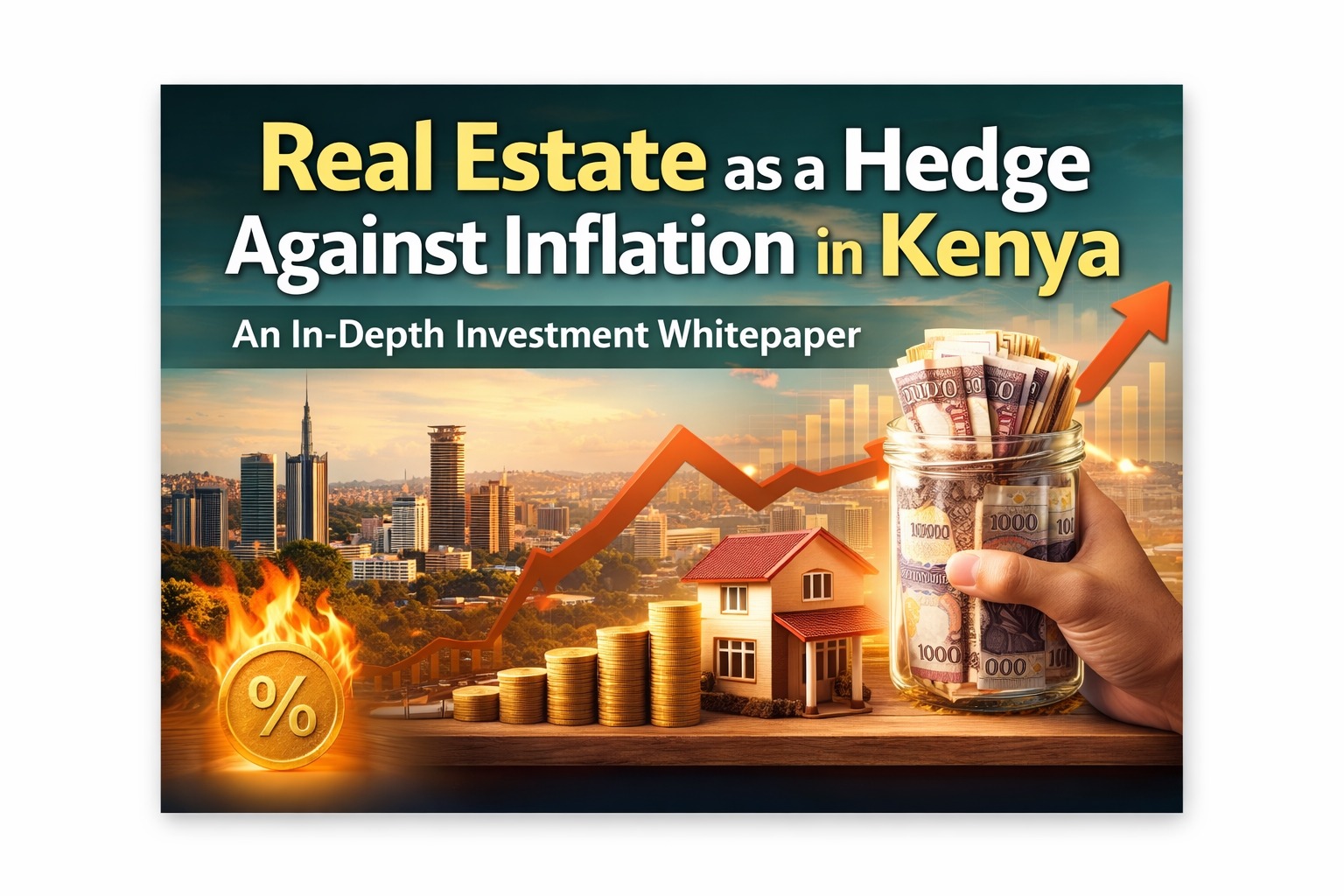
Kenya Real Estate as an Inflation Hedge: A Strategic Guide for Investors
Inflation quietly erodes purchasing power, compresses real returns, and injects uncertainty into even the most disciplined financial plans. For Kenyan investors navigating a landscape shaped by currency fluctuations, fiscal pressures, and periodic inflationary cycles, the search for assets that preserve capital is more urgent than ever.
Real estate in Kenya has long been regarded as a resilient inflation hedge, offering tangible value and income growth that cash and fixed-income instruments often cannot match. This guide explores how Kenya inflation hedge real estate strategies work, what the market evidence shows, and how institutional and private investors can position their portfolios for long-term wealth preservation.
—
Understanding Inflation in the Kenyan Context
Inflation refers to the sustained increase in the general price level of goods and services over time. In Kenya, inflation dynamics are shaped by several key factors:
– Exchange rate volatility of the Kenyan Shilling
– Imported fuel and food price shocks
– Fiscal deficits and public debt dynamics
– Monetary policy interventions by the Central Bank of Kenya
– Regional trade patterns and global commodity pricing
Periods of elevated inflation reduce real returns on cash deposits and fixed-income instruments. This makes tangible assets—particularly real estate—comparatively attractive for investors seeking to maintain purchasing power.
The Economic Theory Behind Real Estate as an Inflation Hedge
Real estate hedges inflation through two primary channels:
1. Capital appreciation driven by rising construction costs, land scarcity, and replacement value adjustments.
2. Rental income growth aligned with market price adjustments over time.
The Real Return Framework
Investment performance under inflation is best assessed through real return:
> Real Return = Nominal Return − Inflation Rate
If a property appreciates at 12% annually while inflation averages 7%, the real return is approximately 5%. Conversely, cash earning 6% during 7% inflation produces negative real returns.
Real estate’s ability to reprice—through rent reviews and market value adjustments—creates structural resilience relative to fixed-income assets.
Asset Characteristics That Enable Inflation Hedging
Tangible Asset Base
Land is finite. In urban Kenya—particularly Nairobi, Kiambu, Mombasa, and satellite towns—scarcity underpins long-term value.
Replacement Cost Dynamics
Construction inputs (cement, steel, labour) rise with inflation. As replacement costs increase, market values tend to adjust upward.
Rental Escalation Clauses
Commercial leases often include:
– Annual escalation clauses (5–10%)
– CPI-linked adjustments
– Periodic rent reviews
This mechanism transmits inflation directly into income growth.
Currency Diversification
Prime office and diplomatic residential leases in select Nairobi zones are denominated in USD, offering a partial hedge against local currency depreciation.
Historical Performance of Kenyan Property During Inflationary Periods
Although returns vary by segment, historical evidence suggests:
– Land in peri-urban corridors has experienced strong nominal appreciation during inflationary cycles.
– Residential rentals in middle-income zones have shown gradual upward adjustment.
– Prime commercial property has demonstrated stronger income-linked inflation transmission.
– Urban nodes such as Westlands, Upper Hill, Karen, Kilimani, and emerging satellite towns have exhibited relative resilience.
Segment-by-Segment Analysis
Residential Property
Strengths:
– Broad demand base
– Rental repricing flexibility
– Diaspora investment inflows
Risks:
– Oversupply in specific apartment segments
– Regulatory taxation changes
Mid-market housing typically adjusts gradually to inflation. Luxury segments may lag during economic contraction but recover over longer cycles.
Commercial Office
High-quality Grade A office buildings in established business districts often include structured lease agreements with defined rent escalation. However, remote work trends and oversupply in specific zones may suppress short-term growth.
Retail Real Estate
Retail performance correlates with consumer purchasing power. Inflationary pressure on households may reduce retail margins, but anchored shopping centres with essential services maintain occupancy resilience.
Industrial & Logistics
Industrial property has demonstrated increasing relevance due to:
– E-commerce growth
– Regional trade corridors
– Demand for warehousing
Long leases and institutional tenants enhance inflation-adjusted income stability.
Land Banking
Land appreciation often outpaces inflation during infrastructure expansion phases (bypasses, expressways, industrial corridors). However, land generates no interim cash flow and depends entirely on capital appreciation.
Compounding and Long-Term Wealth Preservation
Real estate’s effectiveness as an inflation hedge strengthens over time due to compounding growth. Long-term holding amplifies appreciation effects, particularly in growth corridors benefiting from infrastructure and demographic expansion.
Portfolio Allocation Strategy
For Kenyan investors seeking inflation protection, a diversified allocation model might look like:
– 40% Residential income property
– 25% Commercial or industrial
– 20% Land (growth corridor)
– 15% Liquid assets (for flexibility)
Institutional investors may further diversify through REIT exposure where available.
Real Estate Investment Trusts (REITs)
Kenya has introduced REIT structures regulated by the Capital Markets Authority, providing indirect exposure to income-producing property.
Advantages:
– Liquidity compared to direct property
– Professional management
– Lower entry thresholds
Considerations:
– Market liquidity constraints
– Pricing volatility
Risks to the Inflation Hedge Thesis
While real estate offers inflation protection potential, it is not immune to risk.
Liquidity Risk
Property transactions are slower compared to equities or bonds.
Regulatory & Taxation Changes
Capital gains tax, property rates, and stamp duty affect net returns.
Interest Rate Sensitivity
Mortgage rates influence demand and affordability.
Oversupply Risk
Excess development in certain residential and office nodes may suppress rental growth.
Valuation Considerations in Inflationary Environments
Professional valuation remains essential. Income-producing property valuation typically employs the income capitalisation approach:
> Value = Net Operating Income / Capitalisation Rate
Inflation affects both net operating income (through rent growth) and capitalisation rates (through interest rate shifts). Rising interest rates may expand cap rates, potentially offsetting income growth in valuation terms.
Real Estate vs Alternative Inflation Hedges in Kenya
| Asset Class | Inflation Hedge Strength | Liquidity | Volatility |
|————-|————————-|———–|————|
| Real Estate | Moderate to Strong | Low | Moderate |
| Equities | Variable | High | High |
| Gold | Moderate | High | High |
| Fixed Income | Weak (unless inflation-linked) | High | Low |
Property provides tangible asset backing but requires active management and a long-term orientation.
Institutional Perspective: Pension Funds & Insurance
Kenyan pension funds allocate meaningful portions of portfolios to property due to:
– Stable long-term income
– Capital preservation
– Diversification benefits
Insurance firms similarly favour commercial and mixed-use assets with structured lease income.
Strategic Location Selection
Inflation hedging strength correlates strongly with location quality. Key determinants include:
– Infrastructure investment
– Transport connectivity
– Population density growth
– Zoning and planning regulation
– Proximity to employment nodes
Location discipline often determines whether property outperforms or merely tracks inflation.
Currency Dynamics and Diaspora Investment
Depreciation of the Kenyan Shilling can:
– Increase cost of imported construction inputs
– Support USD-denominated lease attractiveness
– Encourage diaspora investors to deploy foreign currency capital
Real estate can therefore function as both an inflation hedge and a partial currency hedge under certain structures.
Long-Term Structural Drivers
Kenya’s demographic profile supports property demand:
– Urbanisation trends
– Expanding middle class
– Infrastructure modernisation
– Regional trade hub positioning
These structural factors reinforce real estate’s role in long-term capital preservation.
ESG and Sustainable Development Considerations
Modern investors increasingly evaluate:
– Energy-efficient building design
– Solar integration
– Water harvesting
– Green building certification
Sustainable properties may demonstrate superior tenant retention and long-term value stability.
Scenario Analysis
| Scenario | Expected Behaviour |
|———-|——————-|
| Moderate Inflation (5–7%) | Rental income adjustments track inflation gradually |
| High Inflation (8–12%+) | Land and construction-linked appreciation may accelerate; affordability pressures may dampen transaction volumes |
| Disinflationary Period | Property appreciation moderates; income stability becomes primary return driver |
—
Strategic Recommendations
For investors considering Kenya inflation hedge real estate:
– Focus on income-producing property in established nodes.
– Avoid speculative oversupplied apartment clusters.
– Engage professional valuation before acquisition.
– Consider a mixed allocation between direct property and REIT exposure.
– Adopt a long-term holding horizon (7–15 years).
—
Conclusion
Real estate in Kenya remains one of the most structurally resilient asset classes for investors seeking protection against inflation. Its effectiveness, however, depends on disciplined acquisition, location quality, prudent leverage, and professional asset management.
Unlike cash and fixed deposits that erode under inflationary pressure, well-selected property assets can adjust through rental growth, capital appreciation, and replacement cost dynamics. When integrated into a diversified portfolio, Kenyan real estate provides tangible value preservation and potential real return generation over extended cycles.
For sophisticated investors, the key is not merely owning property—but owning the right property, at the right price, under the right structure, and within a strategic long-term framework.




Join The Discussion