

 by
by 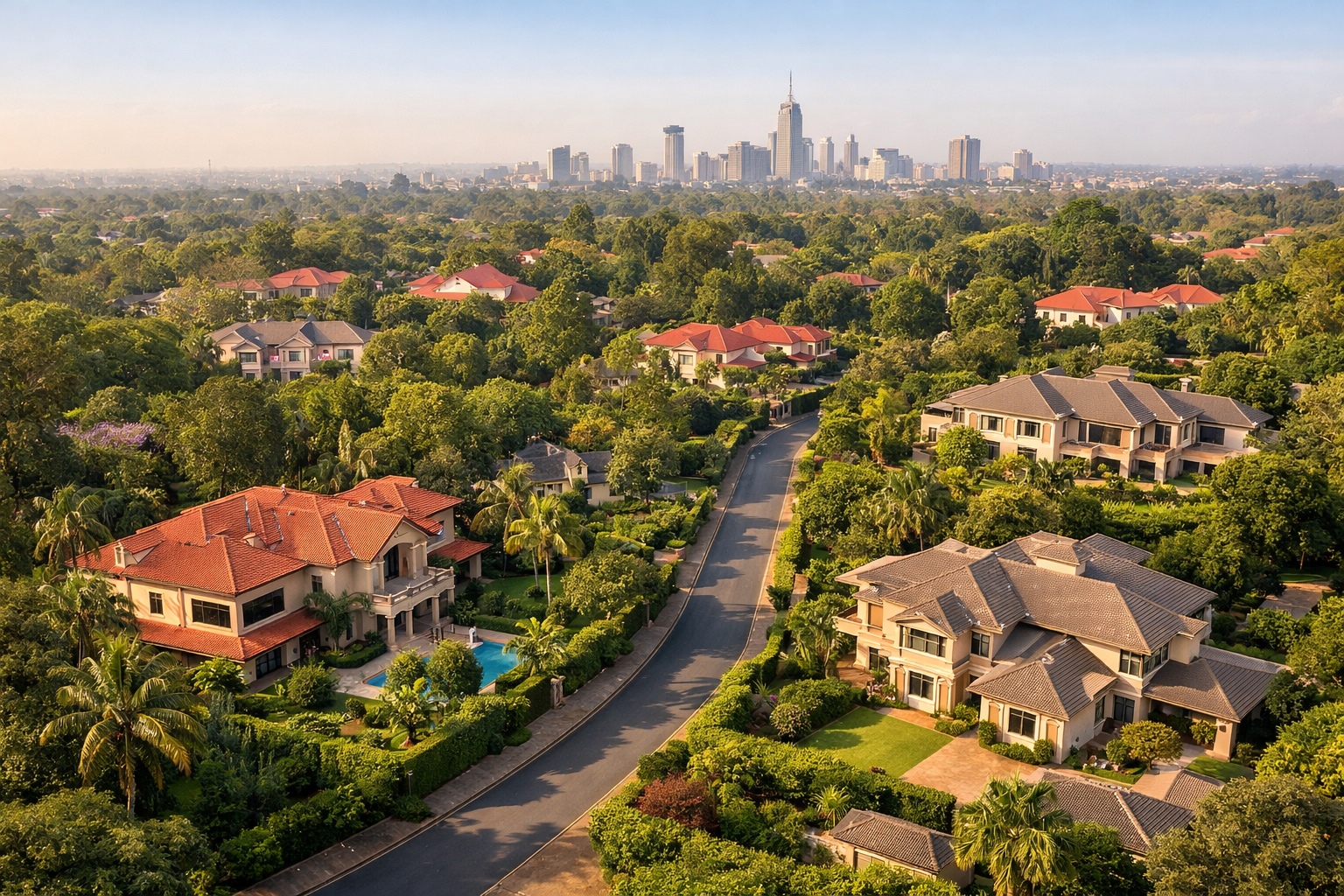
Nairobi Leafy Suburbs Guide: Prestige, Demographics, and Real Estate Evolution
Nairobi’s leafy suburbs represent the most influential residential market segment in Kenya’s real estate ecosystem. These neighbourhoods shape land pricing benchmarks, rental ceilings, development standards, and lifestyle expectations across the entire city. Long before Nairobi expanded vertically and outward into satellite towns, leafy suburbs defined what premium urban living meant — space, greenery, privacy, and social status.
Today, these areas sit at the center of a complex transition. They are no longer purely low-density enclaves, yet they still command the highest land values, attract the most affluent demographics, and influence zoning and planning debates across the city.
This comprehensive Nairobi leafy suburbs guide explores these prestigious areas from historical, demographic, spatial, and market perspectives — tracing their evolution from colonial origins to modern high-value residential zones. We also identify the top leafy suburbs, their defining characteristics, and their future outlook.
—
What Defines a Leafy Suburb in Nairobi?
The term leafy suburb is a real estate classification shaped by land use history, plot sizes, infrastructure quality, and resident profiles. A leafy suburb in Nairobi is typically characterized by:
– Low to medium residential density
– Mature tree cover and landscaped compounds
– Larger plot sizes compared to city averages
– Controlled land use and historically restrictive zoning
– High-value residential developments
– Strong security presence
– Proximity to international schools, diplomatic missions, and lifestyle amenities
Importantly, leafy suburbs are not defined by distance from the CBD but by quality of living environment. Some are close to the city core (Riverside, Kileleshwa), while others lie on the outskirts (Karen, Runda). Both qualify due to lifestyle and land use patterns.
—
Historical Evolution of Nairobi’s Leafy Suburbs
Colonial Foundations: The Original Suburbs
Nairobi’s earliest leafy suburbs emerged during the colonial period, shaped by European planning ideals that emphasized segregation, space, and environmental aesthetics. Key characteristics included:
– One house per plot
– Generous setbacks
– Tree-lined roads
– Exclusive residential zoning
The earliest and most influential original leafy suburbs include:
– Muthaiga
– Karen
– Upper Hill (initially residential)
– Lavington (early phases)
These areas were designed for administrators, senior civil servants, and expatriates, setting a precedent for what premium residential neighbourhoods would look like in Nairobi.
Post-Independence Expansion (1960s–1980s)
Following independence, Nairobi experienced significant population growth and economic expansion. The leafy suburb concept expanded to accommodate a growing African elite, professionals, and diplomats. This era gave rise to:
– Kileleshwa (originally bungalow-based)
– Riverside
– Spring Valley
– Kitisuru
These neighbourhoods retained low density but introduced modern architecture, improved road networks, and closer proximity to emerging commercial nodes.
Contemporary Transformation (1990s–Present)
From the 1990s onward, land scarcity and population pressure triggered rezoning and redevelopment, especially in centrally located leafy suburbs. Key changes include:
– Replacement of single-dwelling plots with apartment blocks
– Vertical expansion in formerly low-rise zones
– Mixed-use pressure near commercial corridors
– Rising land subdivision
This has resulted in two categories of leafy suburbs today:
1. Preserved low-density leafy suburbs — maintaining original character
2. Transitional leafy suburbs — undergoing densification
—
Who Lives in Nairobi’s Leafy Suburbs?
Understanding the demographics of leafy suburb residents is critical for development planning and investment analysis.
Income and Wealth Levels
Residents generally fall into upper-income and high-net-worth brackets, including:
– Senior corporate executives
– Business owners and entrepreneurs
– Diplomats and international organization staff
– Professionals in law, medicine, finance, and consulting
These income levels support higher rental rates, premium home prices, and strong demand for lifestyle amenities.
Expatriate and Diplomatic Presence
Several leafy suburbs have historically attracted expatriates due to:
– Proximity to embassies and international organizations
– Availability of large standalone homes
– Security and controlled neighbourhood environments
This demographic significantly influences:
– Rental pricing (often dollar-denominated benchmarks)
– Property finishing standards
– Demand for gated communities
Family-Oriented Demographics
Leafy suburbs are strongly family-oriented, driven by:
– Access to international and private schools
– Quiet environments
– Outdoor space for children
– Lower congestion compared to inner-city zones
This explains why many leafy suburbs maintain consistent demand even during broader market slowdowns.
—
Key Characteristics That Differentiate Leafy Suburbs
Land Size and Plot Configuration
Leafy suburbs typically feature:
– Quarter-acre, half-acre, or one-acre plots
– Rectangular or irregular plots designed around natural landscapes
– Limited plot coverage ratios
This contrasts sharply with high-density estates where land efficiency is prioritized over space.
Architectural Typologies
Common property types include:
– Standalone luxury villas
– Ambassadorial residences
– Gated townhouse developments
– Low-rise luxury apartments (in transitional areas)
Design emphasis is placed on:
– Privacy
– Natural lighting
– Landscaping
– Outdoor living spaces
Infrastructure and Accessibility
Leafy suburbs benefit from:
– Paved internal roads
– Reliable utilities
– Proximity to major arterial roads
– Access to shopping centers and hospitals
However, infrastructure strain is increasingly visible in transitional areas where densification has outpaced upgrades.
—
Nairobi’s Top Leafy Suburbs: A Detailed Analysis
Muthaiga: Old-Money Prestige
Muthaiga remains Nairobi’s most exclusive residential address. It is defined by:
– Extremely low density
– Large, mature gardens
– Minimal commercial intrusion
Property ownership in Muthaiga is limited, tightly held, and rarely speculative. Demand is driven by prestige rather than affordability, making it a price leader rather than a volume market.
Karen: Space, Serenity, and Lifestyle Living
Karen represents the archetype of a leafy suburb with:
– Expansive plots
– Semi-rural atmosphere
– Proximity to nature and conservation areas
It attracts families, retirees, and high-end buyers seeking space over proximity to the CBD. Karen also supports destination lifestyle developments, including boutique malls and gated communities.
Runda: Gated Prestige and Diplomatic Appeal
Runda combines:
– Controlled access neighbourhoods
– Wide roads and consistent planning
– Proximity to international institutions
It is highly attractive to expatriates and corporate tenants, resulting in strong rental demand for high-end homes.
Lavington: Transitional but Resilient
Lavington is a classic example of a leafy suburb under transition. While parts retain standalone homes, others have evolved into townhouse clusters and luxury apartments. Its strength lies in:
– Central location
– Access to schools and malls
– Diverse housing options
This makes it appealing to both owner-occupiers and investors.
Kitisuru: Emerging High-Value Enclave
Kitisuru has rapidly evolved into a high-value leafy suburb with:
– Modern luxury villas
– Gated developments
– Increasing land values
It bridges traditional low density with contemporary architectural trends.
Riverside: Urban Leafy Living
Riverside offers leafy living within close proximity to commercial hubs. It is characterized by:
– Diplomatic residences
– Mid-rise luxury apartments
– Strong rental demand
It appeals to professionals who value convenience without sacrificing quality.
Spring Valley and Ridgeways: Niche Leafy Suburbs
These smaller suburbs retain strong leafy characteristics while benefiting from strategic locations near Westlands and Northern Nairobi growth corridors.
—
Real Estate Market Dynamics in Leafy Suburbs
Land Values and Appreciation
Leafy suburbs consistently record the highest land values per acre in Nairobi due to:
– Scarcity of undeveloped land
– Strong zoning protections
– Prestige value
Land in these areas is often acquired for redevelopment rather than greenfield construction.
Rental Market Performance
Rental demand is driven by:
– Expatriate tenants
– Corporate leases
– High-income local households
Detached homes, townhouses, and luxury apartments all perform well, provided infrastructure and security standards are maintained.
Development Trends
Current development patterns include:
– Replacement of old bungalows with multi-unit townhouses
– Vertical redevelopment in rezoned zones
– Boutique gated communities
However, excessive densification poses long-term risks to neighbourhood character and infrastructure sustainability.
—
Challenges Facing Leafy Suburbs
Despite their appeal, leafy suburbs face several challenges:
– Infrastructure strain due to densification
– Traffic congestion from increased population
– Environmental pressure from reduced green cover
– Planning inconsistencies and zoning enforcement issues
These challenges directly affect valuation, livability, and long-term investment returns.
—
Investment Outlook and Future Trends
Looking ahead, Nairobi’s leafy suburbs are expected to:
– Remain resilient against market downturns
– Continue attracting high-income buyers
– Experience selective redevelopment rather than mass densification
– Shift towards controlled, lifestyle-oriented developments
Sustainability, security, and infrastructure quality will increasingly determine which leafy suburbs outperform others.
—
The Enduring Value of Nairobi’s Leafy Suburbs
Nairobi’s leafy suburbs are more than residential neighbourhoods — they are the backbone of the city’s premium real estate market. From the colonial elegance of Muthaiga to the evolving sophistication of Lavington and Riverside, these areas reflect Nairobi’s social, economic, and urban




Join The Discussion