

 by
by 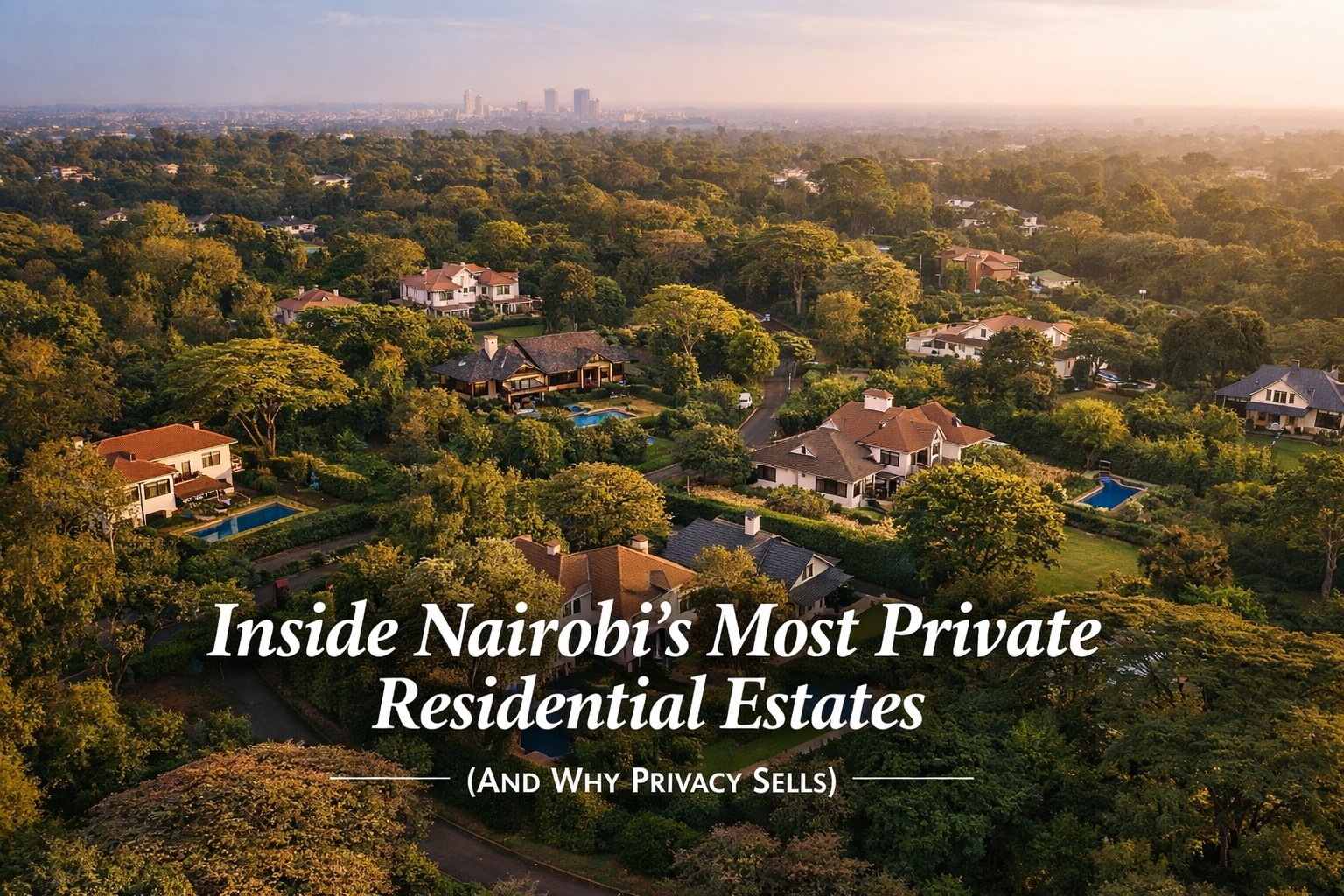
Why Privacy Drives Premium Value in Nairobi’s Luxury Estates
Nairobi’s luxury residential market is undergoing a quiet but powerful transformation. While price, size, and architectural finish have traditionally dominated buyer priorities, privacy has emerged as one of the strongest drivers of value in high-end and premier estates. Corporate executives, diplomats, high-net-worth individuals, and diaspora investors are increasingly prioritising exclusivity, controlled environments, and low-density living over mere proximity to the city centre.
This article explores why Nairobi luxury estate privacy commands a premium, how it is structurally built into the city’s most exclusive neighbourhoods, and why private estates consistently outperform dense developments in value preservation and long-term appreciation.
—
The Rise of Privacy as a Luxury Asset
Globally, prime residential markets—from London’s garden squares to Beverly Hills and Cape Town’s Constantia—share a defining characteristic: controlled density and deliberate privacy. Nairobi is no exception.
As the city expands both vertically and horizontally, traffic congestion, noise pollution, and unregulated densification have eroded the livability of many once-desirable neighbourhoods. In response, affluent buyers are retreating into established, low-density residential enclaves where planning controls, social structure, and physical design actively protect privacy.
In Nairobi’s premium market, privacy has become synonymous with:
– Prestige – exclusivity signals status
– Security – controlled access reduces risk
– Lifestyle quality – quiet, green, and spacious environments
– Long-term capital preservation – stable values through market cycles
This explains why demand for luxury exclusive estates remains strong even during broader market slowdowns.
—
Defining Privacy in High-End Residential Estates
In real estate terms, privacy is not merely the absence of neighbours. In Nairobi’s premier estates, it is a multi-layered system created through planning policy, infrastructure design, and community governance.
Key Structural Elements of Private Estates
High-end estates that command premium pricing typically exhibit the following:
– Low-density zoning regulations – ½-acre, 1-acre, or controlled subdivisions
– Wide internal roads with minimal through traffic
– Limited commercial intrusion – no random shops or offices
– Controlled access points or estate-only circulation
– Mature tree canopies and landscaped buffers
– Strong resident associations that enforce development standards
Together, these elements reduce congestion, visual exposure, and noise—creating environments that feel insulated from the city despite their strategic locations.
—
Nairobi’s Most Private and Exclusive Residential Estates
Karen: The Benchmark for Luxury and Privacy
Karen remains one of Nairobi’s most recognisable symbols of luxury, exclusivity, and low-density living. Originally developed on former coffee estates, Karen benefits from:
– Large land parcels, often ranging from ½ acre to several acres
– Deep building setbacks that keep homes hidden from view
– Strict zoning controls that limit overdevelopment
– Mature greenery that naturally shields properties
Karen’s appeal lies in its organic privacy—homes are tucked within nature rather than hidden behind high walls. This has allowed the suburb to retain its premier status for decades, making it one of the most resilient luxury residential markets in Kenya. From an investment perspective, Karen demonstrates how planning discipline and environmental buffers translate directly into sustained high-end property values.
—
Muthaiga: Legacy, Prestige, and Scarcity
Muthaiga is arguably Nairobi’s most prestigious residential enclave. Its exclusivity is driven less by marketing and more by scarcity and historical regulation.
Key defining features include:
– Very limited property turnover
– Strict architectural and zoning controls
– Large legacy plots
– Minimal commercial presence
Muthaiga attracts buyers who value discretion, heritage, and long-term value preservation. Privacy here is deeply institutional—reinforced by community standards and planning frameworks that resist change. Because supply is effectively fixed, property values in Muthaiga remain insulated from speculative volatility, positioning it as a defensive luxury investment location.
—
Runda: Structured Privacy and Diplomatic Appeal
Runda was purposefully designed to meet the needs of diplomats, multinational executives, and international organisations. Its privacy is engineered through:
– Estate-style road networks
– Controlled access and security-conscious planning
– Consistent plot sizes
– Clear separation of residential and commercial uses
Unlike organically grown suburbs, Runda’s strength lies in predictability and uniformity. Buyers know exactly what to expect, and that certainty reinforces confidence at the high end of the market. As a result, Runda remains a preferred choice for tenants and buyers seeking secure, quiet, and internationally acceptable residential standards.
—
Gigiri (Residential Zones): Subtle Exclusivity
While Gigiri is widely known for embassies and international institutions, its residential pockets offer a highly controlled and discreet living environment. Attributes include:
– International-grade security awareness
– Limited residential supply
– Low-rise development
– Mature landscaping
For buyers prioritising privacy with proximity to diplomatic and international infrastructure, Gigiri offers a rare balance of strategic location and controlled residential character.
—
Nyari and Old Lavington (Low-Density Zones)
Although parts of Lavington have experienced rapid densification, Nyari and select Old Lavington pockets have maintained their estate-style residential identity. These zones benefit from:
– Community resistance to overdevelopment
– Planning controls that restrict high-rise apartments
– Strategic proximity to Nairobi’s commercial nodes
They appeal to buyers seeking luxury living without extreme suburban isolation, offering privacy within reach of business and social amenities.
—
Why Privacy Commands a Premium in Nairobi’s Luxury Market
Security Through Design
Private estates reduce exposure to random traffic and unfamiliar movement. This passive security model is especially attractive to high-net-worth individuals who prefer discretion over visibility.
Lifestyle and Wellness Considerations
Affluent buyers increasingly associate luxury with:
– Quiet environments
– Green space and outdoor living
– Reduced stress and noise pollution
Privacy directly enhances these lifestyle outcomes, making it a functional component of luxury, not just an emotional preference.
Protection of Property Values
Low-density, exclusive estates are structurally resistant to:
– Oversupply of similar properties
– Sudden zoning changes
– Rapid character degradation
This stability underpins long-term capital appreciation and resale confidence—critical factors for premium buyers and investors.
Buyer Psychology and Status Signaling
In luxury real estate, privacy signals:
– Social status
– Financial maturity
– Long-term orientation
Buyers are not simply purchasing homes; they are purchasing controlled environments that reflect their personal and professional positioning.
—
The Scarcity Effect: Why Private Estates Are Irreplaceable
Nairobi’s urban growth trajectory makes the creation of new low-density luxury estates increasingly unlikely. Land fragmentation, infrastructure pressure, and policy shifts favour higher-density development. As a result:
– Existing private estates become more valuable
– Entry barriers rise
– Owners hold assets longer
This scarcity effect reinforces the investment logic behind premier residential locations.
—
Implications for Buyers and Investors
For buyers, privacy should be assessed as carefully as title type, location, and price. Key questions include:
– What zoning protections exist for the area?
– How strong is the resident association?
– Is the neighbourhood vulnerable to future densification?
For investors, private estates offer:
– Stable and consistent demand
– Resilient pricing during downturns
– High-quality tenant profiles
—
Privacy as a Strategic Real Estate Asset
In Nairobi’s high-end residential market, privacy is no longer optional—it is foundational to luxury, exclusivity, and long-term value creation. The city’s most private estates endure because they were planned with intention, protected by policy, and sustained by community standards.
As Nairobi continues to evolve, these neighbourhoods will remain anchors of stability in an increasingly dynamic urban environment. For buyers and investors seeking premier, high-end residential assets, remember: privacy is not just what sells—it is what lasts.



Join The Discussion